
Understanding Border Design
A well-designed flower border looks effortless, but achieving that effect requires understanding key design principles. These techniques work whether you're creating a small bed or a sweeping border.
The Rule of Threes
Plant in groups of three, five, or seven—odd numbers create more natural-looking arrangements. Single plants get lost, while masses create impact and make maintenance easier.
Creating Depth
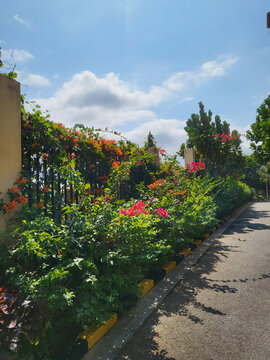
- Tall plants in back: Create backdrop with height
- Medium plants in middle: Fill the body of the border
- Low plants in front: Define edges and hide bare stems
- Break the rules occasionally: Bring a tall, airy plant forward for interest
Color Strategies
- Monochromatic: Variations of one color for sophistication
- Analogous: Adjacent colors on the color wheel (blue-purple-pink)
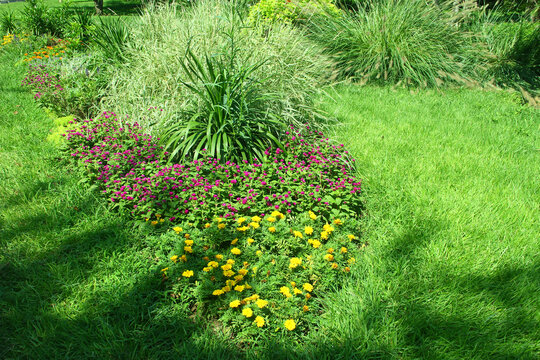
- Complementary: Opposite colors for drama (purple and yellow)
- Hot colors: Red, orange, yellow advance visually
- Cool colors: Blue, purple, pink recede and calm
Texture and Form
Mix contrasting textures for interest:
- Spiky with rounded (iris with geraniums)
- Fine with bold (baby's breath with dahlias)
- Upright with cascading (delphiniums with catmint)
Planning for Seasons
Ensure interest throughout the year:
- Spring: Bulbs, early perennials
- Summer: Peak perennial bloom, annuals
- Fall: Asters, sedums, ornamental grasses
- Winter: Structure from grasses, evergreens, interesting bark
Practical Considerations
- Match plants to your site conditions
- Allow enough space for mature plant size
- Plan access for maintenance
- Consider views from inside and from the garden
💬 Comments
0 commentsNo comments yet. Be the first to share your thoughts!
Leave a Comment
Share your thoughts, questions, or tips with our gardening community.